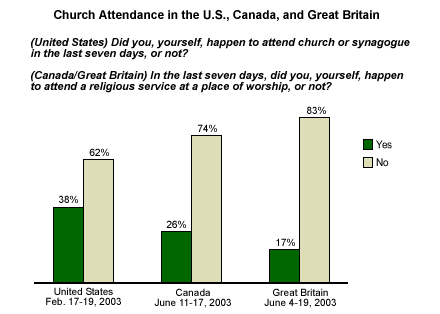
 Church attendance has been dramatically dropping in Britain during the last decade. Most children spend more time in religious observance than their parents because public schools require them to take religious education classes and “participate in acts of collective worship.”
Cnsnews.com recently ran a story about critics who say those religious education policies violate human rights.
I’m not so sure about the ‘violation of human rights part,’ but I do strongly agree the policy should be changed. No one, regardless of age, should be forced to participate in any religious activity. Christianity is the official state religion in the United Kingdom, yet forcing people to participate is antithetical to that religion. Christianity is based on faith, and you can’t force people to have faith. Someone has to choose to believe, not be forced into it.
The way I see it, three different types of people will come out of a system like this. First, some may come out as genuine believers who are strong in their faith and aware of other faiths out there. But this isn’t left up to chance. If someone graduates from High School (or the British equivalent) with a strong faith, it’s not because they were forced to participate in school sponsored religion. Parents are what make the difference. It’s parents who raise genuine believers, not schools. For children who have no religious support from their parents, forcing them participate in religion will probably do more harm then good.
Secondly, this policy probably creates naïve believers. When someone grows up in an environment where Christianity is forced upon them as the right religion, it can be hard to see other points of view. Even when other views are wrong, they still have good points and their supporters feel very passionately about the cause. The view may be wrong, but not taking it seriously can make the situation worse.

Finally, and I think this is the most common result, this policy creates people who dislike, or even hate, Christianity. They might even hate religion in general. If we force kids to participate, many will see religion as a list of rules that have no real connection with modern life. They will see worship and pray as empty rituals that have no real meaning.
People from the third group can be extremely hard to witness to. They’ve grown up in a religious environment, so they think they know what Christianity is. If they see any sign you follow the Bible or God, they shut you out. If a child shows signs of not wanting to participate, it’s probably better to not force them and wait till their older and more receptive.
To be clear, I’m not saying children shouldn’t have religious education. I will get to that tomorrow.

No comments:
Post a Comment