Tuesday, July 15, 2008

Forcing kids to go to church

For as long as I can remember, my family has gone to church nearly every Sunday. Even while I’ve been away at college, I still went to church at the same pace. Yet, since I got back from college a few months ago, two of my sisters, 14 and 17, have been resisting going to church. My dad has been doing just about everything he can think of to get them to keep coming, but I’m beginning to wonder if he should be pushing so hard.


This situation reminds of something I heard years ago. I also grew up going to Awana, a Christian program for kids and teens. When I got to high school, I started helping at our church’s Awana program, after a short training session. One of the topics talked about was how tough it can be to get kids to come to the program. For example, the instructor talked about a kid who really wanted to come to Awana but his parents wouldn’t let him. They were forced to go to church when they were kids. The parents grew up hating everything about church, so they wanted to “protect” their children from it. This is obviously an extreme example, but we should still keep it in mind.

Don’t get me wrong. I’m not saying we should let kids stop going to church as soon as say they don’t want to go. We should help our children develop faith, not just force them to go to church.

1 Peter 3
15 Always be prepared to give an answer to everyone who asks you to give the reason for the hope that you have. But do this with gentleness and respect.

This verse is talked about a lot in relation to apologetics and evangelism in the public arena, but not much is said about how this relates to our relationship with our children. If our children ask why they have to go to church, our answer should be more than ‘because I said so.’

Just forcing kids to go to church doesn’t help them develop their faith. If children grow up thinking of church as little more than a boring weekly ritual they were forced into, we can’t expect them to embrace church when they get older.

But even if we do everything we can to encourage faith in our children, they still may resist going to church at some point. We shouldn’t make the mistake of exasperating our children in our efforts to get them to go to church.

Colossians 3
21 Fathers, do not exasperate your children, so that they will not lose heart.

If someone loses their desire to go to church, forcing them to go may push them farther away. Doing so may turn a mild lack of desire into an active disdain for anything related to it.

Like many areas of life, the right way to do things is also the hard way. It’s easy to drag your kids to church and assert you authority, it’s hard to teach them the value of going to church and assert your faith.

Tuesday, July 8, 2008

Keeping the peace and our faith

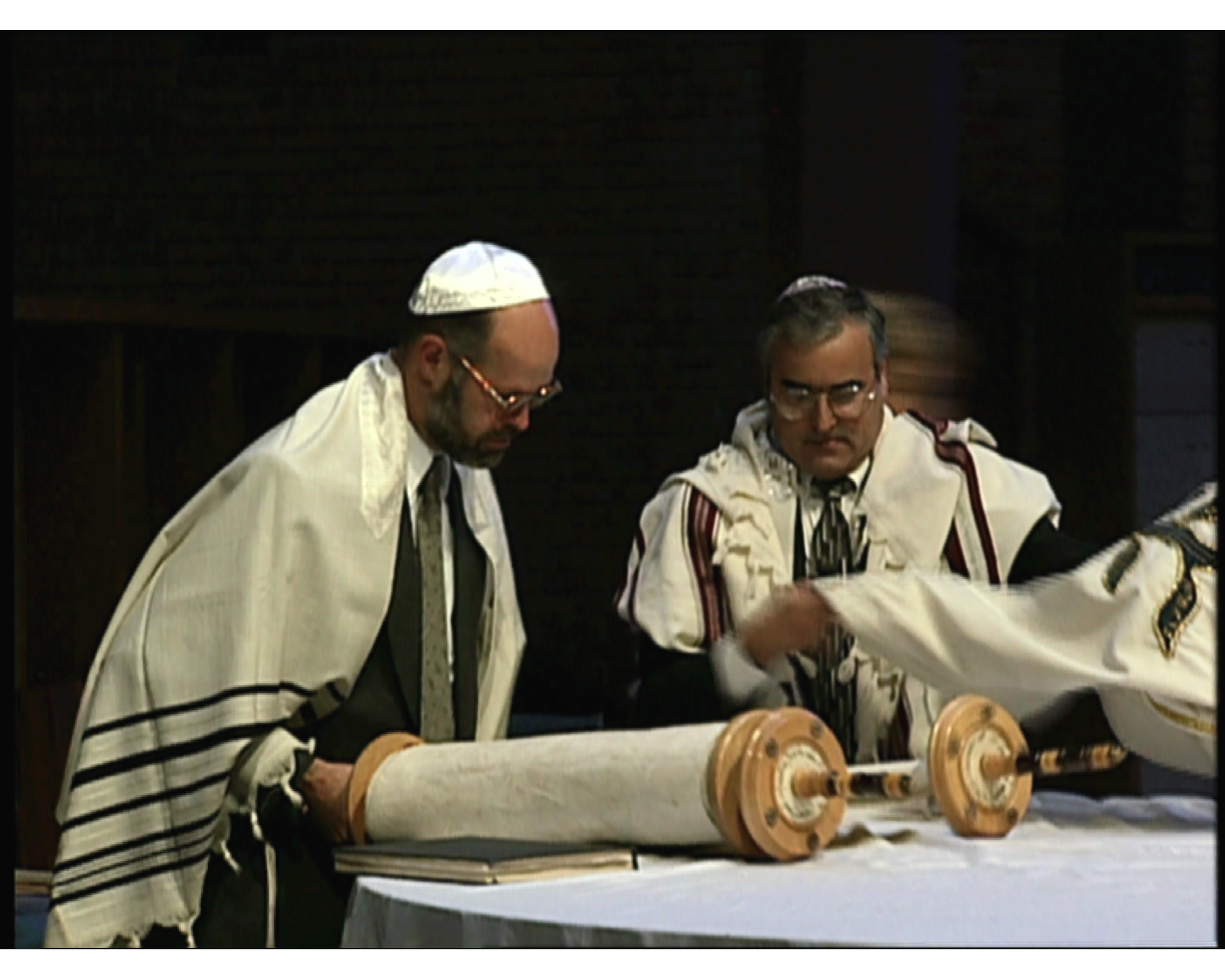
Starting this week, the International Council of Christians and Jews (ICCJ) will be headed by a woman for the first time. Dr. Devorah Weissman will run the organization that tries to keep peace between Christians, Jews and now recently Muslims. Like Weissman said, her election is not the issue at stake. The issue is peace between the three religions. Below are a few quotes from Weissman.

There are assorted takes on the Torah, and each sees itself as most authentic, says Weissman. This notion is reflected in the Talmudic tradition, which embraces mahloket (dispute), she continues. "What is important is that we learn and understand that all approaches are legitimate and part of one tradition."


Just because people see their view as authentic doesn’t mean it is. Two contradictory views of truth and reality can’t both be right. Of course we shouldn’t impose our view on others, but that doesn’t mean we need to ‘learn and understand that all approaches are legitimate.’ We don’t need to have a relativistic view of religion to be effective peacemaker, and thinking all approaches are legitimate is naïve.

Also, how can two contradictory views be part of one tradition? If an approach contradicts a tradition, then it isn’t part of that tradition. If you want to be part of a tradition, you have to actually follow the beliefs of that tradition, not just believe you’re following it.

"I think that the humanistic approach is indeed closer because more xenophobic attitudes, which predominate in tribal societies, exist independent of the Torah. The message of loving the other, however, is where the Torah comes in."


The issues here are differences, communication and conflicts between religions. All three religions, Judaism, Christianity and Islam, assert a supernatural view of life and religion. What’s the point of dealing with this situation with a humanistic approach? The humanistic approach automatically assumes all three religions are wrong. It reduces the religions to opinions and preferences of how life should be lived. They turn into personal, relativistic sets of philosophies.

But that’s not what the religions are and it’s not what they claim to be. Each religion makes claims about reality as a whole and our place in it. A humanist approach trivializes all three religions.

I’m sure xenophobic attitudes exist in these religions, but the situation is more complicated than that. It is possible to be opposed to a faith different than you own without being xenophopic, and accusing people in a religion trivializes them. This isn’t kist a fear of foreign customs or culture. These people believe their religion reflects reality and it’s their duty to tell others about it. Xenophobia is a oversimplification.

Being unbiased and diplomatic is a good goal, but Weissman and the ICCJ have taken it too far. They’ve made themselves ineffective by adopting philosophies that are out of touch with the people they are trying to help.

Anyone can say ‘All views are legitimate, so let’s just get along.’ It takes real wisdom, courage and communication skills to stand up for your beliefs and talk with someone who disagrees at the same time.

Tuesday, July 1, 2008

Does our opinion matter?

I’ve participated in many online discussions on religion over the years. The discussions are healthy to have, and they can be very deep and interesting if participants can refrain from posting simple things like "god sucks." A common flaw I’ve noticed is many people seem to take their opinions too seriously.


For a moment, let's take a step back. I won’t be talking about religion. I won’t say anything about who is right and who is wrong. I’m just talking about truth and reality, and the perception of them.

From those discussions, I’ve noticed a common element, a frequent phrase. “I don’t think God would make a hell”, “I don’t doubt there is a God, I just don’t think it’s the God of the Bible” and “I think religion is more or less a state of mind and soul” are common responses I’ve seen. Many of the statements have one thing in common: the focus on “I think” or “I don’t think.” Don’t get me wrong, I have nothing wrong with opinions. Opinions about things like religion are healthy, but they can only go so far.

For example, here is a video I found on youtube:


Consider this. Jay Leno has a popular segment on “The Tonight Show” where he asks random people on the street common knowledge questions. We see many people who have some interesting answers to the questions. Yet, no matter how much someone may think the South Pole is hotter than the equator, it just isn’t true.

We have two examples here. Either a supernatural creator exists or it doesn’t. Either the South Pole is warmer than the equator or it is not. Of course this doesn’t prove anything about the existence of God. But it does point something out: reality is not changed opinions. Even if the whole world has an opinion about reality, it wouldn’t change what reality is. Almost everyone believed the world was flat. Did that change the reality of it at all?

So what does that have to do with religious discussions? You can think whatever you want about the Bible, God, evolution, humanity and anything else, and you should express your thoughts in well written posts, but none of that means anything in the long run. Reality is what it is. The South Pole is quite cold. Humans came from somewhere, survival of the fittest or creation. One of those is a historical fact, something that actually happened. Don't be fooled into thinking that just because what you think sounds nice or logical means it's right.

Like I said, opinions are healthy. It is human nature to develop our own theories on how things work. Just be careful with what you do with those opinions. Remember that what we all “think”, myself included, has no effect on the reality of what is. Reality is the way it is, regardless of what we think about it.