Tuesday, July 15, 2008

Forcing kids to go to church

For as long as I can remember, my family has gone to church nearly every Sunday. Even while I’ve been away at college, I still went to church at the same pace. Yet, since I got back from college a few months ago, two of my sisters, 14 and 17, have been resisting going to church. My dad has been doing just about everything he can think of to get them to keep coming, but I’m beginning to wonder if he should be pushing so hard.


This situation reminds of something I heard years ago. I also grew up going to Awana, a Christian program for kids and teens. When I got to high school, I started helping at our church’s Awana program, after a short training session. One of the topics talked about was how tough it can be to get kids to come to the program. For example, the instructor talked about a kid who really wanted to come to Awana but his parents wouldn’t let him. They were forced to go to church when they were kids. The parents grew up hating everything about church, so they wanted to “protect” their children from it. This is obviously an extreme example, but we should still keep it in mind.

Don’t get me wrong. I’m not saying we should let kids stop going to church as soon as say they don’t want to go. We should help our children develop faith, not just force them to go to church.

1 Peter 3
15 Always be prepared to give an answer to everyone who asks you to give the reason for the hope that you have. But do this with gentleness and respect.

This verse is talked about a lot in relation to apologetics and evangelism in the public arena, but not much is said about how this relates to our relationship with our children. If our children ask why they have to go to church, our answer should be more than ‘because I said so.’

Just forcing kids to go to church doesn’t help them develop their faith. If children grow up thinking of church as little more than a boring weekly ritual they were forced into, we can’t expect them to embrace church when they get older.

But even if we do everything we can to encourage faith in our children, they still may resist going to church at some point. We shouldn’t make the mistake of exasperating our children in our efforts to get them to go to church.

Colossians 3
21 Fathers, do not exasperate your children, so that they will not lose heart.

If someone loses their desire to go to church, forcing them to go may push them farther away. Doing so may turn a mild lack of desire into an active disdain for anything related to it.

Like many areas of life, the right way to do things is also the hard way. It’s easy to drag your kids to church and assert you authority, it’s hard to teach them the value of going to church and assert your faith.

Tuesday, July 8, 2008

Keeping the peace and our faith

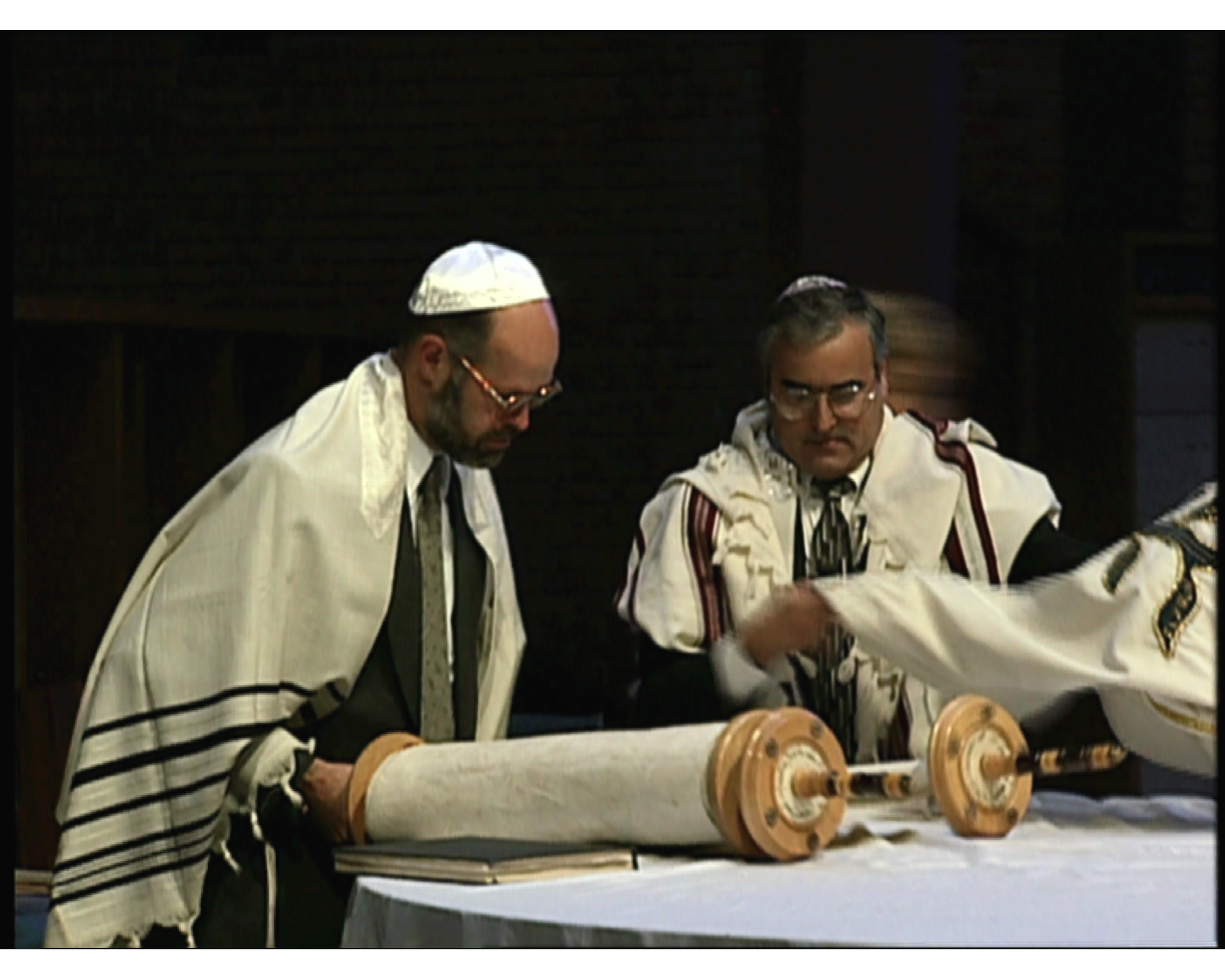
Starting this week, the International Council of Christians and Jews (ICCJ) will be headed by a woman for the first time. Dr. Devorah Weissman will run the organization that tries to keep peace between Christians, Jews and now recently Muslims. Like Weissman said, her election is not the issue at stake. The issue is peace between the three religions. Below are a few quotes from Weissman.

There are assorted takes on the Torah, and each sees itself as most authentic, says Weissman. This notion is reflected in the Talmudic tradition, which embraces mahloket (dispute), she continues. "What is important is that we learn and understand that all approaches are legitimate and part of one tradition."


Just because people see their view as authentic doesn’t mean it is. Two contradictory views of truth and reality can’t both be right. Of course we shouldn’t impose our view on others, but that doesn’t mean we need to ‘learn and understand that all approaches are legitimate.’ We don’t need to have a relativistic view of religion to be effective peacemaker, and thinking all approaches are legitimate is naïve.

Also, how can two contradictory views be part of one tradition? If an approach contradicts a tradition, then it isn’t part of that tradition. If you want to be part of a tradition, you have to actually follow the beliefs of that tradition, not just believe you’re following it.

"I think that the humanistic approach is indeed closer because more xenophobic attitudes, which predominate in tribal societies, exist independent of the Torah. The message of loving the other, however, is where the Torah comes in."


The issues here are differences, communication and conflicts between religions. All three religions, Judaism, Christianity and Islam, assert a supernatural view of life and religion. What’s the point of dealing with this situation with a humanistic approach? The humanistic approach automatically assumes all three religions are wrong. It reduces the religions to opinions and preferences of how life should be lived. They turn into personal, relativistic sets of philosophies.

But that’s not what the religions are and it’s not what they claim to be. Each religion makes claims about reality as a whole and our place in it. A humanist approach trivializes all three religions.

I’m sure xenophobic attitudes exist in these religions, but the situation is more complicated than that. It is possible to be opposed to a faith different than you own without being xenophopic, and accusing people in a religion trivializes them. This isn’t kist a fear of foreign customs or culture. These people believe their religion reflects reality and it’s their duty to tell others about it. Xenophobia is a oversimplification.

Being unbiased and diplomatic is a good goal, but Weissman and the ICCJ have taken it too far. They’ve made themselves ineffective by adopting philosophies that are out of touch with the people they are trying to help.

Anyone can say ‘All views are legitimate, so let’s just get along.’ It takes real wisdom, courage and communication skills to stand up for your beliefs and talk with someone who disagrees at the same time.

Tuesday, July 1, 2008

Does our opinion matter?

I’ve participated in many online discussions on religion over the years. The discussions are healthy to have, and they can be very deep and interesting if participants can refrain from posting simple things like "god sucks." A common flaw I’ve noticed is many people seem to take their opinions too seriously.


For a moment, let's take a step back. I won’t be talking about religion. I won’t say anything about who is right and who is wrong. I’m just talking about truth and reality, and the perception of them.

From those discussions, I’ve noticed a common element, a frequent phrase. “I don’t think God would make a hell”, “I don’t doubt there is a God, I just don’t think it’s the God of the Bible” and “I think religion is more or less a state of mind and soul” are common responses I’ve seen. Many of the statements have one thing in common: the focus on “I think” or “I don’t think.” Don’t get me wrong, I have nothing wrong with opinions. Opinions about things like religion are healthy, but they can only go so far.

For example, here is a video I found on youtube:


Consider this. Jay Leno has a popular segment on “The Tonight Show” where he asks random people on the street common knowledge questions. We see many people who have some interesting answers to the questions. Yet, no matter how much someone may think the South Pole is hotter than the equator, it just isn’t true.

We have two examples here. Either a supernatural creator exists or it doesn’t. Either the South Pole is warmer than the equator or it is not. Of course this doesn’t prove anything about the existence of God. But it does point something out: reality is not changed opinions. Even if the whole world has an opinion about reality, it wouldn’t change what reality is. Almost everyone believed the world was flat. Did that change the reality of it at all?

So what does that have to do with religious discussions? You can think whatever you want about the Bible, God, evolution, humanity and anything else, and you should express your thoughts in well written posts, but none of that means anything in the long run. Reality is what it is. The South Pole is quite cold. Humans came from somewhere, survival of the fittest or creation. One of those is a historical fact, something that actually happened. Don't be fooled into thinking that just because what you think sounds nice or logical means it's right.

Like I said, opinions are healthy. It is human nature to develop our own theories on how things work. Just be careful with what you do with those opinions. Remember that what we all “think”, myself included, has no effect on the reality of what is. Reality is the way it is, regardless of what we think about it.

Monday, June 30, 2008

Online mission field

Online message boards and forums might be the next great mission field.

At first glance, the Gametrailers forums doesn’t seem like a place open to ministry. The members are mostly male, between the ages of 13 and about 24 and many play games for hours a day. But they kept bringing up religion. When I first joined Gametrailers about 4 years ago, forum members were posting threads on religion on a fairly regular basis. Most of the threads turned into arguments and were soon locked. Eventually, the forum moderators realized there’s a strong demand among members to talk about these topics and locking the threads was too much of a hassle. They created a section just for religion and philosophy. Since then, it has been very active with a wide variety of discussions.

Gametrailers is just one example of a site that has nothing to do with religion but still made a religion section because of the demand from its members.

Problems with this ministry: Each one of these communities is like their own country. They have their own history, culture, leaders and laws. Freedom of speech doesn’t apply. The sites are generally open to a variety of topics, but most will ban you if they feel you’re only there to convert people.

Just because a forum has a religion section, that doesn’t mean you can openly proselytize. Just like any mission field, you will need to take it slow, get to know the culture and people and tell them about the gospel when the time is right. Even if you take every possible precaution, you still might get banned.

One of the best things about this possible ministry is it’s flexible to any situation. If you attend a decent size church, especially one with a youth group, there are probably a few members who post on forums. Just find out who posts on forums and teach a few classes on apologetics and evangelism.

This is still just speculation. We don’t know enough about this to say how it may or may not work. But that doesn’t mean Christians shouldn’t do anything it. Hundreds, probably thousands, of people online are asking questions about religion and Christians need to be online with them and ready to respond.

Saturday, June 28, 2008

Dealing with Neopaganism

I knew neopaganism was a fast growing, non-traditional religious movement, but I didn’t realize how strange its philosophy is.

The Denver Post recently ran a story on the trend. A whole book could be written on neopaganism, the article even mentions one that has been written, but I’m just going to pick a few quotes and examine them.

Druids were the priests of the ancient Celts. The essence of [Jesse] Walter's modern druid faith, he said, is that ‘people's perception of reality is what makes reality.’ He said he religiously avoids negative thoughts.

A rock is a rock regardless of how we perceive it. The earth has always been round even though most people perceived it as flat for thousands of years. Those things, and millions of others, are based on facts existing outside our perceptions. Atheism, theism and polytheism all make claims about facts existing outside the perceptions of people. If the realities of geology, astronomy, biology and many other sciences exist outside our perceptions, why would the realities of supernatural beings, or lack thereof, be any different?

Reality exists without us perceiving it, and it isn’t changed by our perceptions. It doesn’t really matter if we don’t like part of reality. Our tastes, desires and opinions of what is fair or right have never changed anything about reality.

‘You'll get no agreement on how Wiccans see God — or Goddess,’ [Carridwen] Brennan said. ‘In Wicca, there is no 'you have to' and 'you can't.' There is no orthodoxy.’

If something is ‘orthodox,’ it conforms to beliefs, attitudes, or modes of conduct that are generally approved. The quote above about perception making reality is orthodoxy. A common neopagan ethic is “As long as it harms none, do what you will.” That is also orthodoxy. If you say you’re a Wiccan or Druid, two branches of neopaganism, then you are conforming to the beliefs, attitudes or modes of conduct associated with those groups.

‘It's important to have a spiritual path that's working for you,’ Brennan said. ‘We all need a connection to something greater than ourselves.’

Our of all the quotes, I think this is the strangest one, especially after comparing it with the previous quotes. First, our perception of reality is what makes reality. Then, we all need a connection to something greater than ourselves. Don’t those two concept contradict each other?

If you want to connect with something greater than yourself, you have to have an open mind. You need to open your mind to the possibility that reality may not be how you expected. You have to be willing to accept there are some realities you don’t like. You can’t make a connection with something bigger than yourself if you keep your mind closed to anything you disagree with or don’t like. If you constrain your beliefs to your own tastes and desires, you will never connect with anything bigger than yourself.

Thursday, June 26, 2008

2012 and the apocalypse

On December 21, 2012, the world as we know it will end. The Mesoamerican Long Count calendar will complete its thirteenth b'ak'tun cycle since it started about 5,000 years ago, which was when this prediction was originally made. It’s unclear whether this event will destroy the world, or transition it into a new state.

This prediction comes from Mayan cultures, but many other cultures have embraced it. A Dutch-language newspaper recently spoke to thousands of people who believe the prediction. Many of those interviewed have started stocking up on emergency supplies like life rafts and other equipment.

If the prediction turns out to be true, it will be a huge event. But if it’s false, the date will be the start of a great missionary opportunity. Either way, the date will have a significant impact on millions of people’s worldview. Many people who grew up believing a religion that follows this prediction will suddenly start questioning that belief system.

When missionaries starts witnessing to people, one of the first things they do is get the person to examine their beliefs. What do I believe? Do my beliefs make sense when compared with each other and the world? What impact have I seen from my belief? Those are all questions we all need to ask at some point in our life. We have the time to ask them at our own pace, but everyone who believes that prediction will be abruptly confronted with them.

We also have to consider that if the date turns out to be nothing, atheists and naturalists will jump on it and use it as further proof religion and anything supernatural is false.

The date could also turn out to be a self-fulfilling prophecy. If large groups of people believe the world is about to end, we might see some rioting and looting. If those situations get bad enough, the followers of the religion might see it as a fulfillment of the prophecy.

No matter what happens, it’s going to be a very interesting holiday season.

Wednesday, June 25, 2008

Obama and the Bible in public life

I usually try to avoid writing about politics, religion and philosophy are a better fit for me, but this election season has repeatedly brought the two topics together. Focus on the Family founder Dr. James Dobson accused Barack Obama of ‘distorting’ the Bible.

Here’s the quote in question from Obama’s 2006 speech:

Which passages of scripture should guide our public policy? Should we go with Leviticus, which suggests slavery is OK and that eating shellfish is an abomination? Or we could go with Deuteronomy, which suggests stoning your child if he strays from the faith? Or should we just stick to the Sermon on the Mount?

So before we get carried away, let's read our Bible now. Folks haven't been reading their Bible.


So unless we somehow follow all the teachings of the Old Testament or say the Bible contradicts itself, we’re not reading our Bible?

Biblical principles can be applied to every area of life, but that doesn’t mean every single point of public policy should be dictated by the Bible. In Romans, Paul said we should submit to the government’s authority as long as it doesn’t contradict God’s teaching. God doesn’t give specific instructions on taxes, immigration or many other issues.

To be fair, the point of Obama’s speech was to contradict the secular argument that people shouldn’t bring religion into public life. Our religion or philosophy, whatever it may be, affects every area of our life. Even if it doesn’t give specific instructions, the questions of equality, authority and priority shapes every decision we make. So Obama’s point is a valid and important one.

But the point is weakened by the attitude that the Bible contradicts itself. If someone accepts the Bible as a source of wisdom and teaching that can help guide one’s life, yet also thinks it contradicts itself, which side of the contradiction are they following? They are following the teaching or principle that appeals to their own predetermined logic and morals. That means we’re dealing with people who think they are appealing to some higher authority, but in reality are only following themselves.


Religion and philosophy should be a bigger part of public life, but don’t fool yourself into thinking you’re following the Bible just because you quote a few verses. If you claim to follow Biblical teachings, then you should actually follow them, not your own version of what you think they mean. The Bible was written in a different language and a very different culture. You can’t follow the Bible unless you deal with those factors.

There are many articles that explain those ‘contradictions’ Obama brought up. I’ll try to briefly explain a few, but if you want more complete explanations, do a search for some articles.

The slavery the Bible refers to was vastly different than the more recent American slavery. It wasn’t based on race and it wasn’t a forced lifetime of servitude. Many people sold themselves into slavery to pay off debts. Their masters released them after a set amount of time. If the slave liked the master, he or she could choose work for the family longer.

The Old Testaments has many teachings on what not to eat and proper hygiene, like regularly washing hands. Considering they didn’t know anything about germs back then, those teachings probably kept many people healthy.

Monday, June 23, 2008

Making a difference

Corban College’s mission: “To educate Christians who will make a difference in the world for Jesus Christ (Matthew 28:19-20).” I graduated from Corban in May with an English/Journalism degree and I’ve been thinking about that mission. No matter how much they want to, Corban’s faculty can’t fully educate people to make a difference.

The classes and faculty do a great job of instilling knowledge, wisdom and a biblical worldview to students, but that’s not enough. If someone wants to make a positive difference in the world for Jesus Christ, they will probably need more than knowledge wisdom and a worldview.

When missionaries go into a mission field, they usually don’t start preaching right away. They spend time, sometimes years, learning the language and culture before they start reaching out to the people there. A college education is essential, but it’s not enough to prepare a missionary. Missionaries need first-hand experience to make a difference. Other professions are the same way.

If I were to take a job in journalism and go into it focusing on biblical ideas, knowledge and wisdom, it would be hard to make a positive difference. I couldn’t start preaching the first day on the job. I will need to take time to learn the language and culture of the publication I work for before I try to make a difference.

Corban, and many other Christian colleges, is doing a great job, but students need to realize making a real difference takes more than writing papers and taking tests. Our education needs to continue after graduation. We need to have enough humility and patience to learn from people before we try to reach them.

Monday, June 16, 2008

Reflections on Mormon 'Christian' discussion

A few weeks ago, I wrote a post dealing with the question ‘Can Evangelicals and Mormons religions both be Christian when they disagree on how to follow Christ.’ Soon after I posted it, I started a thread on a Mormon Apologetic forum. The thread has grown over 200 posts since then and I’ve learned a few things about why this is such a touchy subject. These are trends in the Mormon church, but I’ve also noticed some in other religions.

1. One of the fundamental reasons why there is confusion in this area is most Mormons define ‘Christian’ differently than these other groups saying Mormons aren’t Christian. What I didn’t expect though was the fact that this difference isn’t based on the difference in doctrine between the groups. A user by the name of ‘flameburns623’ explained this difference:

There is a narrow and a broad interpretation or definition of the term 'Christian', The broad term, while a bit fuzzy around the edges, is simply one who accepts Jesus Christ as the principal figure of their religious faith and who therefore orders their life and worship around Him and His teachings in some way, to the best of their human ability by the grace of God and the help of the Holy Ghost.

The narrow definition of a Christian is: one who believes rightly about Jesus Christ as He Himself intends for them to believe, and who therefore orders their life and worship around Him and His teachings in the way He intended them to do, to the best of their human ability by the grace of God and the help of the Holy Ghost.

Speaking broadly therefore: Quakers, Unitarians, Unificationists, Christian Scientists, Latter-Day Saints, Seventh-day-Adventists, Baptists, Roman Catholics, Eastern Orthodox, Presbyterians, Jehovah's Witnesses, Anglicans, fundamentalists, followers of the Unity School of Christianity, and all manner of the various and sundry denominations each and all collectively are Christians.

Speaking narrowly however--some, many or most of the above, named or unnamed, cannot meet the definition of 'Christian'. If Catholicism most-perfectly conforms to the narrow definition of Christianity, then--speaking narrowly--Mormons are not Christians. If Mormonism most-perfectly meets that definition, then Presbyterians and Baptists--speaking narrowly--are not Christians.


So if you’re interested in talking with members of other religions about who may or may not be Christian, make sure you clarify what you each mean by the term ‘Christian.’

2. To be clear, I’m not saying someone has to be a member of a specific church or group to be a Christian. You just have to be following Christ’s teachings as He taught them. As I read more responses and thought about this more, I realized one reason why Mormons might have a problem with that idea.

I visited BYU a few months ago with some friends and we sat in on some classes. One class I visited was called ‘Teachings of the Prophets,’ and the lecture that day was on what happens when we don’t follow the prophets. According to the professor, “questioning and looking for flaws in prophets is sinning” and “doubting is a sign of spiritual sickness.” Another class I visited said we have to follow the prophets if we want to be right with God.

The Mormon church teaches taking the sacrament, going on a mission and performing temple ceremonies are all required to be right with God, and being a member of the church is the only way to do those things.

So Baptists can use the narrow definition of ‘Christian’ without implying people need to join their church to be Christian. But Mormons can’t make the same do the same thing. If they used a narrow definition of ‘Christian,’ they would also have to say people must join their church to be Christian. Of course, this doesn’t prove anybody right or wrong, it’s just an observation.

3. A few members on the forum insisted someone doesn’t have to believe specific doctrines to be a Christian. A member by the name of Flyonthewall said, “belief is general, doctrines are specific.” As long as you say Jesus is the Son of God, the redeemer of the world and our personal savior, then you are a Christian. It doesn’t matter how you define those beliefs or what doctrines you attach to them, as long as you believe them, you’re a Christian. Even if you believe ‘redeemer’ means Christ is perfecting the world so we will be prepared for when the aliens come to earth to make a super-race of human-alien hybrids, you will still be a Christian.

Frankly, I think that view makes no sense. I looked up various definitions of ‘doctrine’ and a common theme was that a doctrine is a belief that is taught and believed by a group. The Bible doesn’t give clear definitions for either ‘doctrine’ or ‘belief,’ but that doesn’t mean we should make up our own definitions for them.

Belief itself is general. It can be applied to many different things. I could say, ‘I believe the Cardinals will win the next Super Bowl’ or ‘I believe my grandfather was a good person.’ But Christ didn’t ask for a general belief. He didn’t say, ‘Just believe.’ He said, ‘Believe in Me.’ That is a specific belief focusing on specific doctrines like ‘He is the Son of God’ and ‘He came to save us.’

Simply put, a Christian is someone who is following Christ and His teachings. We can’t be a Christian if we recite a few beliefs and fail to follow His other teachings.

Wednesday, June 11, 2008

Brainwashing children

Yesterday, I wrote a post about British religious education policies coming under criticism. I consider myself conservative on religion and philosophy, but I agreed with the secular groups that the education policies should be changed, although my reasons were different than theirs.

Some people I’ve talked to have gone to the other extreme and say no one should tell kids about religion. At least one person suggested there should be a law to prevent parents from “brainwashing” their kids with religion. Kids should be raised without being indoctrinated, and once they reach age 18, they can choose for themselves what they believe. There are a few problems I see with that idea.

First of all, the philosophy seems to assume it’s possible to raise kids as blank slates untouched by religion or philosophy. It’s not possible. There’s no such thing as a neutral philosophy. Everyone lives with some kind of bias, and kids learn by example, so they will learn those same biases.

I’m not just talking about religious biases. These are underlying philosophies, principles and values that influence every decision you make. Why do you get up in the morning? Why do your kids go to school? What do you do with spare money you have? If you child steals candy from the grocery store, what do you do? These situations, as well as thousands of others, are what shapes a child’s worldview.

Secondly, even if it was possible to raise children without any philosophical biases, this modern culture would still make it impossible. If you want your children to stand a chance at being competitive in this world, they will need to understand at least a few basics about culture and current events.

Why did people hijack planes and crash them into the twin towers? Why is peace in the Middle East so hard to achieve? Why did so many people make religion a factor in their presidential vote? Basic religious knowledge is essential in at least starting to understand these questions. Issues relating to religion come up on an almost daily basis. If your children have a half-way decent knowledge of current events, they know about religion.

Plus, it’s not just current events. Pop culture, movies, tv, music and the internet all talk about religion. Anyway you look at it, there’s no way to isolate your children from religion.

Monday, June 9, 2008

British schools require religious participation

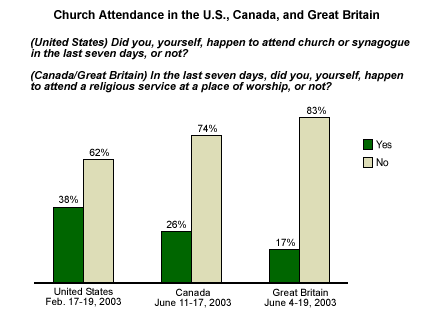
Church attendance has been dramatically dropping in Britain during the last decade. Most children spend more time in religious observance than their parents because public schools require them to take religious education classes and “participate in acts of collective worship.”

Cnsnews.com recently ran a story about critics who say those religious education policies violate human rights.

I’m not so sure about the ‘violation of human rights part,’ but I do strongly agree the policy should be changed. No one, regardless of age, should be forced to participate in any religious activity. Christianity is the official state religion in the United Kingdom, yet forcing people to participate is antithetical to that religion. Christianity is based on faith, and you can’t force people to have faith. Someone has to choose to believe, not be forced into it.

The way I see it, three different types of people will come out of a system like this. First, some may come out as genuine believers who are strong in their faith and aware of other faiths out there. But this isn’t left up to chance. If someone graduates from High School (or the British equivalent) with a strong faith, it’s not because they were forced to participate in school sponsored religion. Parents are what make the difference. It’s parents who raise genuine believers, not schools. For children who have no religious support from their parents, forcing them participate in religion will probably do more harm then good.

Secondly, this policy probably creates naïve believers. When someone grows up in an environment where Christianity is forced upon them as the right religion, it can be hard to see other points of view. Even when other views are wrong, they still have good points and their supporters feel very passionately about the cause. The view may be wrong, but not taking it seriously can make the situation worse.

Finally, and I think this is the most common result, this policy creates people who dislike, or even hate, Christianity. They might even hate religion in general. If we force kids to participate, many will see religion as a list of rules that have no real connection with modern life. They will see worship and pray as empty rituals that have no real meaning.

People from the third group can be extremely hard to witness to. They’ve grown up in a religious environment, so they think they know what Christianity is. If they see any sign you follow the Bible or God, they shut you out. If a child shows signs of not wanting to participate, it’s probably better to not force them and wait till their older and more receptive.

To be clear, I’m not saying children shouldn’t have religious education. I will get to that tomorrow.

Monday, June 2, 2008

Can Christianity be offensive?

Like I said in my last post, many Mormons I’ve talked to have said they don’t want to say other faiths aren’t Christian. I will respond to three reasons I’ve heard.
“We don’t say other faiths aren’t Christian because we’re not prophets. We’re not God. We don’t have the authority to say other religions don’t follow God.”

It doesn’t matter. The LDS church believes its doctrine is God’s doctrine, right? The members believe they’re following the correct interpretation of the Bible, right? If the church is right, then religions that contradict their doctrines are contradicting God’s doctrines.

“We don’t want to offend people by saying they aren’t Christian.”

In Matthew 15, Jesus rebuked some Pharisees. The disciples asked Him about it.

“12 Then the disciples came and said to Him, "Do You know that the Pharisees were offended when they heard this statement?"

13 But He answered and said, "Every plant which My heavenly Father did not plant shall be uprooted.”

Jesus didn’t have a problem with pointing out where people were wrong, even if telling them was offensive.

In Galatians 1, Paul rebuked false teachers.

“8 But even if we, or an angel from heaven, should preach to you a gospel contrary to what we have preached to you, he is to be accursed!

9 As we have said before, so I say again now, if any man is preaching to you a gospel contrary to what you received, he is to be accursed!”

Paul said people who taught other religions should be cursed. He even repeated himself to emphasize the point. Why are people today so reluctant to say other religions are wrong? Verse 10 is also important to this discussion.

“10 For am I now seeking the favor of men, or of God? Or am I striving to please men? If I were still trying to please men, I would not be a bond-servant of Christ.”

When you refrain from telling someone they’re not following Christ, are you seeking the favor or men, or of God?

Don’t get me wrong, I’m not saying people should be offensive with their faith. I know many people have gone way over the line in expressing their beliefs.

There is absolutely nothing to justify that sign. But just because some people have been that offensive, it doesn’t mean religious people should shy away from any kind of offense. The purpose of any ministry should never be offending others. The gospel and God’s truth should always be the focus.

Friday, May 30, 2008

Are we all Christians?

I recently signed up online for Latter-Day Saint (LDS), a.k.a. Mormon, missionaries to come to my house and talk. I had talked with other missionaries before, but I still had some questions about the LDS culture. One of the main questions dealt with was the position of the LDS church that Catholics, Protestants, Methodists, Jehovah’s Witnesses and Mormons are all Christian.

Google the phrase ‘Mormon Christian’ and you’ll get 4-6 articles on the first page claiming Mormons aren’t Christian. LDS scholars have responded to this with various counter claims.

Daniel Peterson and Stephen Ricks said the following:
Mormons declare themselves Christian, and are astonished to be told that they are not. They belong to a Church in which every prayer is uttered, every sermon is given, and every ordinance is performed literally in the name of Jesus Christ. Their hymns—the devotional heart of their Sunday worship—sing of Christ and his atonement. . . In baptism and in the weekly communion they know as “the sacrament,” they testify that they are willing to take upon them his name. Their first Article of Faith announces their belief in "God the eternal Father, and in His son, Jesus Christ."

For the sake of discussion, 'Christian' was defined as ‘someone who believes in Christ and follows His teachings.’ I asked about someone who believes Christ was a good teacher who taught good moral principles, but doesn’t believe He was God. They agreed that kind of person is not a Christian. So a Christian has to accurately believe and follow Christ to be a Christian, not just do part of it.

I’ve heard missionaries claim those other denominations are Christian because they all believe in salvation by grace through the atonement. But the problem is those faiths believe very different things about salvation, grace and the atonement. If Mormons are following those teachings accurately, then other faiths that believe differently are not believing accurately and therefore not Christian.

One objection the missionaries had was they didn’t want to say other faiths aren’t Christian because they don’t know all the beliefs of the faith. But you don’t have to know all their beliefs. Salvation is one of the most important doctrines Christ taught. If they don’t view salvation as Christ and His disciples taught it, they aren’t Christian.

Some missionaries I’ve talked to said they don’t say other faiths aren’t Christian because they don’t want to offend people. I will respond to that in my next blog.

Wednesday, May 21, 2008

One true religion

I would like to respond to one more thing about the video I linked to in my last blog. About 35 seconds into the video, it says, in a sarcastic tone, “After all, only one god can be right.”

I’ve heard many other people say it’s mean and intolerant to claim only one belief is right. What’s wrong with that statement? Christians, Muslims and other religions have used the claim for violence, but that doesn’t make the claim itself wrong. By itself, the claim that “My religion is the only right one” is not mean or intolerant. It’s simply an expression of a belief about reality.

Like I said in an earlier blog, all religions can’t be right because they contradict each other. When I say my religion is the only true one, I’m not being intolerant. Other people have every right to believe whatever they want to believe.

It seems some people treat belief about religion like opinions about movies and music. Everyone has their own opinion about what the best music and movie is. But in reality, there is no such thing as the best music or movie. Different genres appeal to a variety of tastes and there are varying levels of quality, but there is no “best.” Religion is different.

We all live in the same reality. Our tastes, desires and beliefs can never change our reality. There’s no concrete evidence for which religion reflects that reality, but that doesn’t change the fact that there is only one true religion.

So what’s wrong with believing your religion is the true one? As long as you don’t try to force other people to believe it or use the belief for violence, there’s nothing wrong with thinking yours is the true one.

Monday, May 19, 2008

Holy Bible = Rule Book

Many of the causes of hostility between belief groups is confusion. A good example of this is a video recently posted on a comedy site here.

I’ll respond to a few of the points video brings up. I realize it was probably meant as a joke, but it also reflects many complaints I’ve heard before.

Near the start of the video, an animation claimed the “Holy Bible = Rule Book.” But that’s a misunderstanding of what the Bible is.

Yes, it does list some rules, but it’s far more than that. Most Bibles are over 1,000 pages long, and only a small fraction lists rules. Most of it is story telling, history, poetry, wisdom and doctrine.

Besides, "rules" does not accurately describe that small fraction of the Bible. One of the main purposes of the Bible is to teach us about God so we can have a relationship with Him, similar to a parent/child or husband/wife relationship.

Let's say you're married and your spouse wanted to let you know what her likes and dislikes are, how you can make her happy in what you say and do. She knows you tend to forget some things, so she makes a list detailing how she would like you to live out your marriage vows (love, cherish, support). What would you consider that list? They aren't things you must do. You have free will to chose what you want to do. It's just her way of reminding you "If you love me, here's the best way to show it." I wouldn't call those rules.

Think about it from the other way. If you wanted to have a loving relationship with someone, would you require them to follow a list of rules? That’s not how a healthy, loving relationship works. If the Bible was really written by God, the basis and model of a loving relationship, then why would he want a domineering relationship with us?

I’m not saying the Bible teaches we should have a marriage relationship with God. Reverential, awe-inspired respect is also part of the teaching, but having a rulebook for our relationship with God is not.

Wednesday, May 14, 2008

A Great Religious Lie

A common approach to religion I’ve seen is someone saying it doesn't really matter what you believe. They say if there is a God, He would be happy with our devotion no matter what religion we claim, as long as that religion doesn't hurt anyone else. That view is called Unitarian Universalism (UU) or just universalism, all focusing on the idea of unity.

The view basically says all religions are right. There are many ways to God and heaven. The official UU website says their congregations “Unitarian Universalists include people who identify as Christians, Jews, Buddhists, Hindus, Pagans, Atheists, Agnostics, Humanists, and others. As there is no official Unitarian Universalist creed, Unitarian Universalists are free to search for truth on many paths.”

But there's one major thing wrong with that philosophy. It contradicts itself.

All of the major religions say they are the only way to God. Catholics say you MUST take the sacraments, and religions that don't are wrong. Mormonism says you must do temple work to get to God, and religions that don't are wrong. Traditional Christianity says you must have complete faith in the grace of Christ and put your trust in Him, and religions that add to that are wrong. There are others, but you get the point. How can all of these be right if they all say they are the ONLY right way?

The list from the UU website includes the major religions of the world. Most of them believe in at least one god. Yet it also mentions atheism. If any of the world religions are true, then atheism is wrong. If atheism is right, then all religions that believe in a god are wrong.

This is not a ploy to get you to join a religion or read the bible, I'm just asking you to be philosophically realistic. Don't believe the lie that there are many roads to the truth, whatever it is. Search for yourself and find out which belief true.

Monday, May 12, 2008

Why talk about philosophy?

This is my blog to talk about philosophy, religion, spirituality and anything related to those topics.

These topics have been the subject of countless arguments. So why should we keep talking about them? Because they have eternal significance and they are crucial to understanding each other.

What happens after we die? Is there an afterlife? Are we reborn in another form or do we cease to exist? Do we have any control of what happens to us after death? Is there a purpose to our existence? If so, what is it? These are all questions with eternal significance. Everyone should deal with these questions and find an answer for themselves. It’s naïve to pretend these questions don’t exist or aren’t important.

But there’s more to this than just focusing on your own philosophy. A crucial part of understanding each other is making an effort to understand other philosophies. This means listening to others instead of assuming you know what they believe. Christians and atheists, Baptists and Mormons, liberals and conservatives, both sides in each case need to do a better job of listening to the other side. Even if you’re on the correct side of an issue, not listening to the other side will lead to arguments.

‘Listening’ to supporters of the other side means more than just hearing what they say. We also need to respectfully consider the strengths of a philosophy even if we disagree with it.

I will try to make frequent posts on various topics for this blog. Some will be dealing with broad topics like truth in general, but I will also talk about specific conflicts between philosophies and religions. If anyone has questions, I’ll be happy to respond to them and possibly write a blog about the question.